显示标签为“wiki”的博文。显示所有博文

2016年4月15日星期五

Different Types of DAC & AOC

SFP+ to SFP+ DAC is the direct attach twinax copper cable that connects a SFP+ on one terminal end and another SFP+ on the other end. It provides input and output of 10G Ethernet through the SFP+ small form factor. SFP+ to SFP+ DAC can be categorized into passive SFP+ to SFP+ DAC and active DAC. The passive copper uses straight wire which does not consume power and usually used in short distance up to 12m, while the active copper uses power-consuming electronic components which is lighter and thinner with a limitation distance from 15 to 20m.
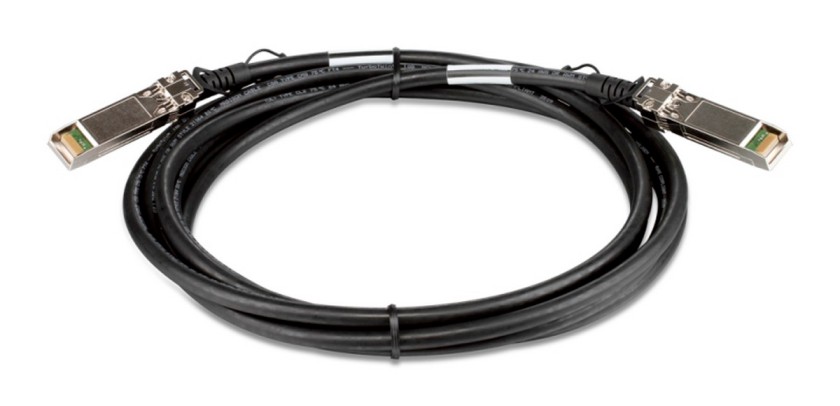
SFP+ to SFP+ DAC
QSFP+ to QSFP+ DAC is a type of direct attach twinax copper cable that links two QSFP+ transceiver modules on each terminal end which eliminates the connector. QSFP+ to QSFP+ DAC operates in 40G Ethernet by using the quad small-form factor pluggable plus with integrated duplex serial data links for bidirectional communication. There are classifications of passive QSFP+ to QSFP+ DAC and active QSFP+ to QSFP+ DAC. The former is cheaper but not includes electronic components, while the latter is more expensive but possesses electronic components with higher performance.
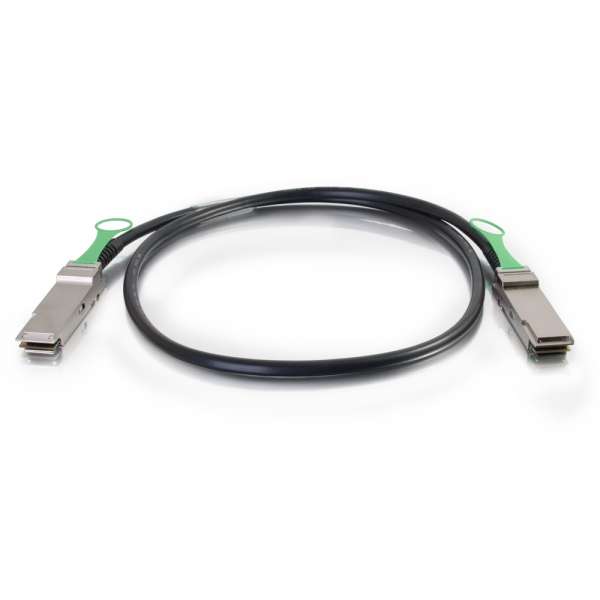
QSFP+ to QSFP+ DAC
 QSFP+ to 4 SFP+ DAC is the direct attach twinax copper cable which has one QSFP+ module on one end and four SFP+ modules on the other end. It is designed to be applied in 40 Gigabit Ethernet. The port with a QSFP+ is available to provide the data rate of 40Gbps, and the port with four SFP+ is able to reach the rate of 10Gbps for each module. This type of DAC enables the cable to reach more than one device at the terminal end, which is more effective and useful for multiple devices performing at the same time. And it has two sorts of passive QSFP+ to 4 SFP+ DAC and active QSFP+ to 4 SFP+ DAC.
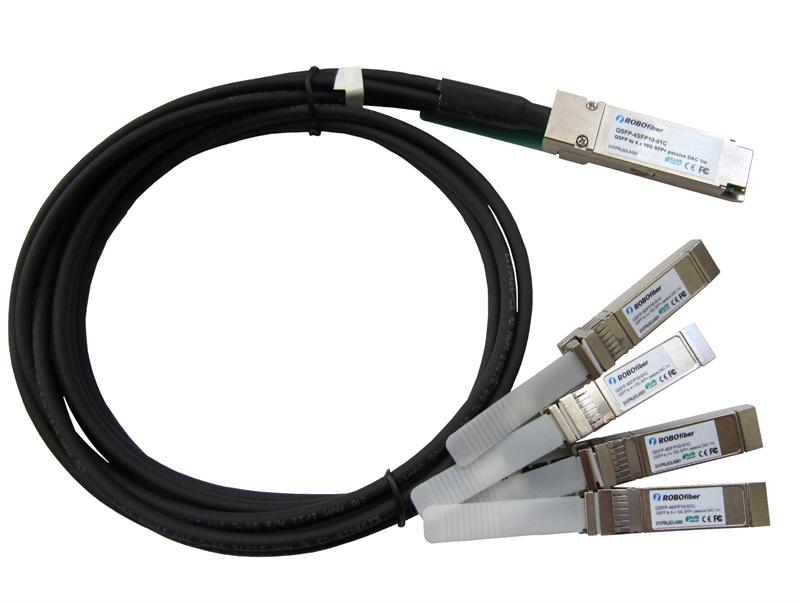
QSFP+ to 4 SFP+ DAC
SFP+ to SFP+ AOC is the active optical cable that attaches two SFP+ transceivers to each end. It is used for 10G Ethernet transmission for a much longer distance than direct attach copper cable which can reach up to 100 meters. The material of AOC is made of optic fiber to convey electronics and optics. This makes SFP+ to SFP+ AOC have a higher performance and lower power consumption. Since the SFP+ to SFP+ AOC is always active, it has no other classifications.
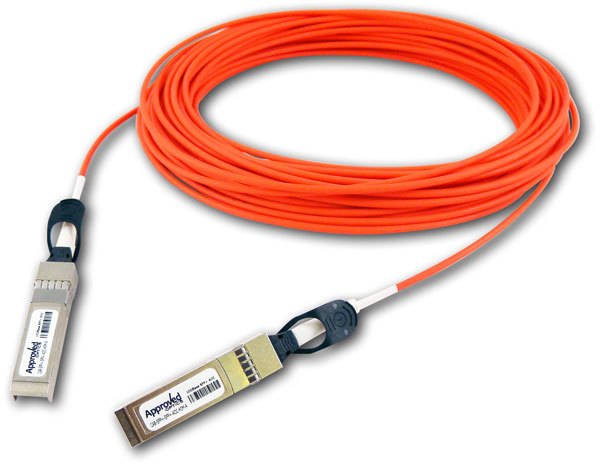
SFP+ to SFP+ AOC
QSFP+ to QSFP+ AOC is the active optical cable which connects an QSFP+ transceiver on one end and a QSFP+ transceiver on the other end. QSFP+ to QSFP+ AOC can reach a wider bandwidth of 40G in Ethernet which enables a faster transmitting speed. The connected distance is limited up to 100m which is longer than DAC products. QSFP+ to QSFP+ AOC transmits electronic and optical data via optic fiber which provides a better functionality, and it is keeping to be active all the time.
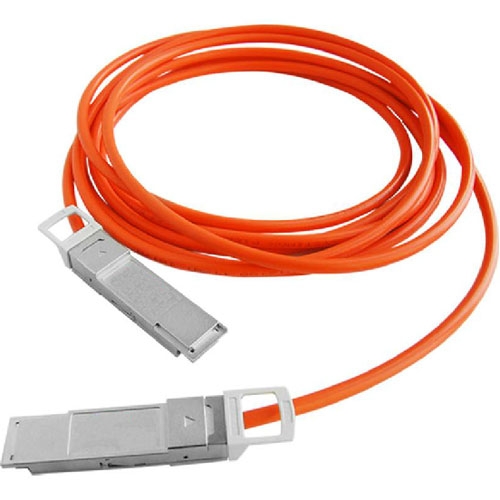
QSFP+ to QSFP+ AOC
QSFP+ to 4 SFP+ AOC is the active optical cable, one of its terminal end is linked to an QSFP+ module and the other end is linked to four different SFP+ modules. It is applied in the 40G Ethernet with a higher transmission speed than 10G products. The QSFP+ to 4 SFP+ AOC can be connected to more than one device which greatly improved the effectiveness of devices. With the development of AOC, it is now acting as the replacement of DAC for a higer performance with optic fiber.
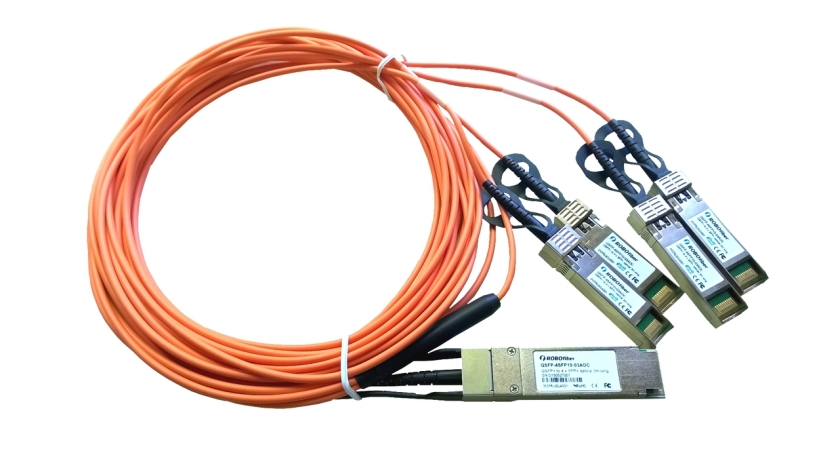
QSFP+ to 4 SFP+ AOC

2016年4月14日星期四

Direct Attach Cable & Active Optical Cable

Direct Attach Cable (DAC) is the cable that links the integrated duplex data transceivers for bi-directional communication, and the modules and cable can not be separated. It is designed for 10 Gigabit Ethernet, and is only available for 10G port. DAC can be classified into passive and active ones. The passive DAC only provides direct connection between cable ends, transmission through copper wire, while the active DAC can provide electronics and optics within connectors, transmission through fiber. Therefore, DAC is can be either passive or active but Active Optical Cable (AOC) which belongs to the category of active DAC is active all the time. 

Active Optical Cable (AOC) is a kind of cable linked to transceiver modules without connectors. The connection can not be separated, if the transceiver or cable needs to be changed, they should be removed together. It is an active DAC to provide electronics and optics within connectors, transmission through fiber. AOC has the advantage of a wider bandwidth which can reach up to 40Gbps with QSFP+, a lighter weight compared with direct attach copper cable and the electromagnetic (EMI) immunity. But the shortage of AOP is the expensive price in light of its cost.

Fiber optic connector is the terminal end of an optic fiber, it is easier and faster for people to joint different devices with connector instead of splicing which needs other tools for connection. The connector allows light pass through optic fiber. There are many types of connectors, such as SC connector, LC connector, FC connector, ST connector, and MTP/MPO connector. Different kinds of connectors are varied in different connector size or connecting ways. Generally, one system will use the same type of connectors.

MPO connector is a Multi-fiber Push-On/Off connector used for the joint between devices and optic fiber. It is designed for high-density light transmission in high-speed bandwidth and data network. The difference between MPO connector and other types of connectors is its larger size of multiple connectors on one end and a single connector on the other end. MPO product is available with 8, 12, 24 and 48 connectors which allows the operator to change channels simply by repatching the fanned-out side of the cable. There are two structures of MPO plug, one is the female plug with guide hole, and another is male plug with guide pin. 28.LC connector is a widely used fiber optic connector to joint equipment and optic fiber together. 
MOP connector

LC connector stands for lucent connector. It is a small form-factor fiber optic connector designed to provide horizontal light waves vary from 1280nm to 1624nm. It is considered to be the replacement for SC connector due to a 50% smaller size of a 1.25mm ferrule.The shape of connector is the same as SC connector but also smaller. LC connector is available for the push-pull function which is convenient for installation and uninstallation and is favored for single-mode. 
LC connector

SC connector is a snap-in connector used for high performance transmission. First invented by Nippon Telegraph and Telephone (NTT) in 1980s. SC is abbreviated for Square Connector owing to its square shape, and has a 2.5mm ceramic ferrule for providing accurate alignment. It is adopted in the same coupling way and pin as FC connector. SC connector is now one of the most popular connectors in the world because of its cheaper price, easier push-off installation, high-temperature and high-pressure resistance.
SC connector

2016年4月12日星期二

MPO Fiber Optic Patch Cable

MPO fiber optic patch cable is one of the fiber optic patch cables for the use of connecting the ends of two different computer devices. MPO is short for Multi-fiber Push On, it is a technique for the high integration level of fiber paths. It usually has two to twelves multiple cores, and twenty-four cores at most. And the cable connector has two different ends of a female one and a male one. It also can be classified into single-mode and multiple-mode according to different distance. In a word, with the multiple cores in optic fiber, the performance of fiber is highly improved.

Multimode Fiber Patch Cable

Multimode fiber patch cable is a kind of fiber patch cable to connect one network device with another. In contrast with single-mode fiber patch cable, it has a larger diametral core of 50μm or 62.5μm and can transmit light waves through multiple paths which decreases the cost and increases the bandwidth. However, this kind of mode will cause more loss while transmitting the light waves due to chromatic dispersion. In this way, multimode fiber patch cable is usually used for short distance transmission. The color of this mode is also unique as orange or grey for distinction.

Single-Mode Fiber Patch Cable

Single-mode fiber patch cable is a type of patch cable used for the connection of two network device ends. As for the meaning of single-mode, it is a form of data transmission which uses only one single path to transmit light signals. This greatly reduces the signal loss during the transmission process, thus single-mode fiber patch cable is normally used for long distance transmission. It only restricts the mode of waves not the frequencies, therefore multiple waves can join in the fiber with different frequencies. And single-mode fiber patch cable has its own yellow color to make a distinction from other mode fiber patch cables.

Patch Cable

Patch cable, also known as patch cord or patch lead, is the copper wire or fiber optic cable for the connection between one electronic or fiber device to another. It is often used for short range connection. There are different types of patch cable, each of them is distinguished in a specific color. For instance, the Multimode Fiber Patch Cable is usually in orange or grey and Single-mode Fiber Patch Cable in yellow. Patch cable is generally made from stranded sheathing in order to enable pliability to reduce the risk of breaking them when carrying or unplugging them.

FC SFP

Fiber Channel (FC) SFP is the transceiver using the technology of fiber channel for the high speed optical signal transmission. Fiber channel is a mature technology for serial interface standardized by American National Standards Institute (ANSI), it is applied for the connection between the storage controller and computer drivers. Nowadays, FC has played as a replacement for the Small Computer System Interface (SCSI) in high-performance storage systems, because fiber channel is faster in transmission speed, and more flexible in the transmitting mode with or without fiber in accordance with the transmission range.

SONET SFP

Synchronous Optical Networking (SONET) SFP or Synchronous Digital Hierarchy (SDH) SFP is a kind of transceiver based on the SONET/SDH standard. SONET is the physical standard for fiber optical transmission, first brought out by Bellcore in 1980s and then standardized by American National Standards Institute (ANSI) for the popularization in the whole world. In the SONET standard, it mainly stipulates the transmission rate, fiber interface, operation and maintenance in optical fiber transmission. With the help of SONET, the communication device around the world can connect with each other, which greatly improved the efficiency of fiber communication.

DWDM SFP

Dense Wavelength Division Multiplexing Small Form-factor Pluggable (DWDM SFP) is the hot-pluggable transceiver used for Gigabit Ethernet which gathers different wavelengths together onto one single fiber. DWDM SFP has a more intensive wave spacing for a high performance of data communication, nowadays it can reach the speed up to 400Gbps on one optic fiber. The wave intervals are varied in 0.4nm, 0.8nm, 1.6nm etc. according to people’s need. The port of this transceiver still used the SFP interface for over 1 gigabit optical data transmission.

2016年4月11日星期一

CWDM SFP

CWDM SFP is a kind of single mode transceiver used for Gigabit Ethernet and fiber channel applications. It is made up of three parts: a uncooled laser transmitter, a PIN photodiode integrated with a trans-impedance preamplifier and a MCU control unit. The wavelengths of CWDM SFP are between 1470nm and 1610nm distinguished by different colors. Most commonly used CWDM SFP transceivers include CWDM SFP 1470, CWDM SFP 1490, CWDM SFP 1510, CWDM SFP 1530, CWDM SFP 1550, CWDM SFP 1570, CWDM SFP 1590, CWDM SFP 1610. CWDM SFP can support the high performance of 1.25Gbps data rate and 80km distance of signal transmission.

DWDM

Dense Wavelength Division Multiplexing(DWDM) is used for carrying multiple optic waves into one single optic fiber. Compared with CWDM, the CWDM possesses a much more dense wavelength intervals which can support up to 80 channels at present. And each channel can carry the 2.5Gbps light signal. Therefore, DWDM maintains a more stable wavelength than CWDM and is available for long diatance optical transmission. But the biggest shortage of DWDM is the high cost of device price and energy consumption, it is not suitable for the use among ordinary people.

CWDM

Coarse Wavelength-Division Multiplexing (CWDM) is an economical technique to save fiber resources through transmitting multiple wavelengths on one optic fiber. Especially, CWDM has the benefit of low cost becuase of its uncooled modulating lazer which only consumes 0.5w power. The cost of CWDM system only takes up 30% of the DWDM expense. Thus, CWDM is suitable for the application in short distance, high bandwidth and areas with dense access points. However, the disadvantage of CWDM is that its supportable wavelengths are limited, usually for five or six different optic wavelengths between 1270nm and 1610nm with a 20nm interval.

WDM

WDM is the acronym of Wavelength-Division Multiplexing, it is a technique to carry different wavelengths through a single optic fiber. The system uses one multiplexer at the transmitting end to combine several signals with each other, and a demultiplexer at the receiving end to split the signals apart. According to the differences of channel space, there are mainly two kinds of WDM techniques, one is DWDM (Dense Wavelength-Division Multiplexing), and the other is CWDM (Coarse Wavelength-Division Multiplexing). WDM makes bidirectional communication come ture, which greatly saves the cost of optical fiber.

BiDi SFP

BiDi SFP, known as Bi-Directional SFP, is the fiber optic transceiver for over 1 gigabit data transmission. The core technology of this kind of transceiver is BiDi transmission which uses Wavelength Division Multiplexing (WDM) technique for bidirectional transmission of two different waves with only one optical fiber. Since the BiDi module just has one port , it must be employed in pairs. For example, when one port is used for receiving 1310nm and transmitting 1550nm optical signals, the other should receive 1550nm and transmit 1310nm signals, and vice versa. In this way, BiDi products usually cost more money than ordinary ones, but it is a better way to use BiDi transceivers to save the optical fiber expenditure.

2016年4月10日星期日

QSFP28 Transceiver

QSFP28 is a 4-channel transceiver available for the transmission and reception of light and electricity data in fiber communication. 28 stands for the highest possible rate of 4x28Gbps in transmission. Compared with SFP+ and product, it is capable of transmitting the information on 100G Ethernet and consumes lower power for over 50% reduction. In general, QSFP28 is an evolvement version of QSFP, it is used on 100G Ethernet while QSFP transceiver on 40G Ethernet. The application of QSFP28 is often employed on high-speed interconnects within and between switches, routers and transport equipment, on server-server clusters, super-computing interconnections and on various backplanes.

CXP Transceiver

CXP is the fiber optic transceiver with a high integration level for data communication. It works for 100G Ethernet and chassis interconnections equipped with 12 channels. These 12 channels achieved the duplex transmission for both receiving and sending signals which greatly enhanced the transmission speed. And it supports multirate transmission up to 12.5Gbps per channel. CXP is 45mm long and 27mm wide which is a little bigger than XFP packaging. Up till now, the technology for CXP is still in progress, but it will become the development tendency for the use of fiber optic transceivers.

CFP4 Transceiver

CFP4 is an optical transceiver module to transmit and receive light or electricity information. It is an upgraded version of CFP2 which reaches a smaller size of only 21mm width, that is one quarter the size of CFP and half the size of CFP2. CFP4 is applied for 100G Ethernet communication and long distance transmission up to 10km. In view of the better functionality of CFP4, it costs much higher than the average transceivers, thus is not so commonly used by ordinary people. In the future, when technology matures, it may be available as the mainstream product for a 400G network.

CFP2 Transceiver

CFP2 is an evolved version of CFP used as an 100G form-factor pluggable transceiver for fiber optical communication. With a higher integration level, CFP2 is only half the size of CFP in 41mm. It consumes lower power and possesses a more compact port and higher production capacity. Besides these small differences, the functionality of CFP and CFP2 is identical. As for transmission range, CFP2 is usually used for long distance network applications up to 10km. Followed by CFP2, CFP4 is now designed to satisfy the further development of fiber optical transmission.

2016年4月8日星期五

CFP Transceiver

In the near future, 100G network will be applied as mainstream. In order to meet people’s need, CFP transceiver is developed for a faster transmission of light and electricity information. CFP is short for Centum Form-factor Pluggable, it is a new type transceiver for the 100G fiber optical network. It can replace many former transceivers like SFP+, SFP, XFP etc., and provide a more efficient ability of information transmission. Although CFP can realize the 100Gbps speed, it has an inconvenient big bulk. Then CFP2 and CFP4 came out to solve the volume problem of CFP.