显示标签为“AOC”的博文。显示所有博文

2016年5月31日星期二

Overview of Active Optical Cable


In respond to the demand for a higher data bandwidth, active optical cable (AOC) has came into being to satisfy different cloud computing applications. Active optical cable is a term used to describe a cable that mates with standard electrical interfaces. The electrical-to-optical conversion on the cable ends is adopted to enhance the transmission speed and distance of the cable without sacrificing compatibility of standard electrical interfaces. This article will give a general introduction of active optical cable and its most popular product in the current market.

Structure of Active Optical Cable
Active optical cable mainly consists of two parts- the fiber optic connector and fiber cable. The connection between fiber cable and connectors is not separable. If the connector or cable needs to be changed, they should be removed together. The electrical and optical signal conversion can be achieved right through each ends of optical fiber.

AOC-Structure

Advantages of Active Optical Cable
However, people may wonder the reasons why choosing active optical cable over direct attach copper cable. Here are some advantages of using active optical cable:
1) Although both cables are used for short range data communication, active optical cable is able to provide a longer reach than direct attach copper cable among devices.

2) Active optical cable has a higher bandwidth because its signal transmits through optical fiber as optical signal which transmits faster than electrical signal in copper cable. The maximum throughput is up to 40 Gbps with QSFP+.

3) The weight of active optical cable is lighter than copper cable due to the optical fiber material. It is possible to achieve a simpler cable management with a lower weight.

4) EMI (electromagnetic interference) immunity is another benefit of active optical fiber. EMI is a disturbance generated by an external source that affects an electrical circuit by electromagnetic induction, electrostatic coupling or conduction. Since the optical fiber is a kind of dielectric which is unable to conduct electric current, active optical cable will not be affected by the electromagnetic energy.

Applications of Active Optical Cable
Active optical cable has been applied to different fields. The followings are the most typical applications for active optical cables:
1) Infiniband QDR, DDR and SDR interconnects

2) Data aggregation, backplane and proprietary density applications

3) PCI-Express, SAS/SATA, Fiber Channel compatible interconnect

4) 40GBE and 10GBE interconnects

5) 10G, 40G telecom connections

6) Hubs, switches, routers, servers

7) Ethernet 10G, 40G

8) Data centers

9) High performance computing clusters

Popularity of 40G Active Optical Cable
Nowadays 40G active optical cable has become one of the most popular products in the market. It is an active optical cable used for 40 GbE terminated with 40GBASE QSFP+. Particularly, 40G breakout active optical cables, such as 40GBASE QSFP+ to 4xSFP+ AOC or 40GBASE QSFP+ to 8xLC AOC, are cost-effective solutions for 40G to 10G migration.

Conclusion
Active optical cable has now taken a great share of the market and is still booming for further development. The interconnection in short range and high speed between devices makes it practical in data center. As the technology matures, the application of active optical cable will be migrated to higher speed transmission in the future.

2016年4月15日星期五

Different Types of DAC & AOC

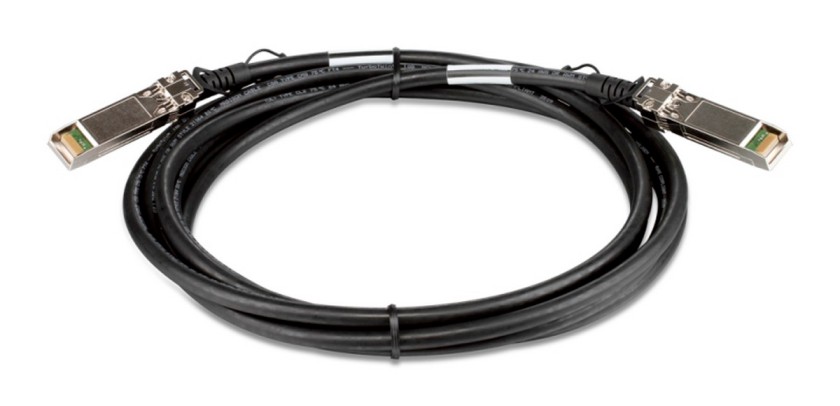
SFP+ to SFP+ DAC is the direct attach twinax copper cable that connects a SFP+ on one terminal end and another SFP+ on the other end. It provides input and output of 10G Ethernet through the SFP+ small form factor. SFP+ to SFP+ DAC can be categorized into passive SFP+ to SFP+ DAC and active DAC. The passive copper uses straight wire which does not consume power and usually used in short distance up to 12m, while the active copper uses power-consuming electronic components which is lighter and thinner with a limitation distance from 15 to 20m.
SFP+ to SFP+ DAC
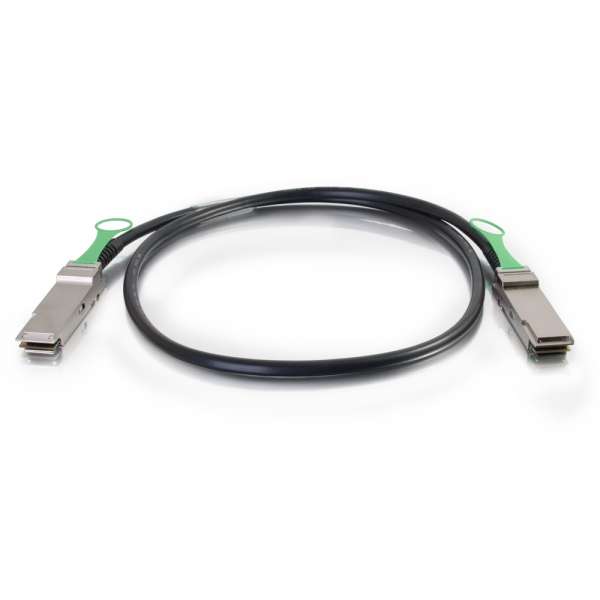
QSFP+ to QSFP+ DAC is a type of direct attach twinax copper cable that links two QSFP+ transceiver modules on each terminal end which eliminates the connector. QSFP+ to QSFP+ DAC operates in 40G Ethernet by using the quad small-form factor pluggable plus with integrated duplex serial data links for bidirectional communication. There are classifications of passive QSFP+ to QSFP+ DAC and active QSFP+ to QSFP+ DAC. The former is cheaper but not includes electronic components, while the latter is more expensive but possesses electronic components with higher performance.
QSFP+ to QSFP+ DAC
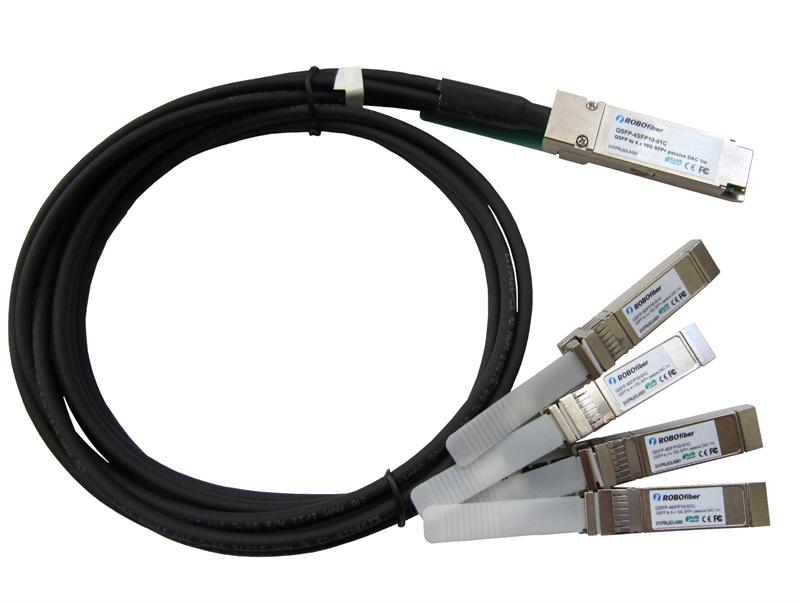
 QSFP+ to 4 SFP+ DAC is the direct attach twinax copper cable which has one QSFP+ module on one end and four SFP+ modules on the other end. It is designed to be applied in 40 Gigabit Ethernet. The port with a QSFP+ is available to provide the data rate of 40Gbps, and the port with four SFP+ is able to reach the rate of 10Gbps for each module. This type of DAC enables the cable to reach more than one device at the terminal end, which is more effective and useful for multiple devices performing at the same time. And it has two sorts of passive QSFP+ to 4 SFP+ DAC and active QSFP+ to 4 SFP+ DAC.
QSFP+ to 4 SFP+ DAC
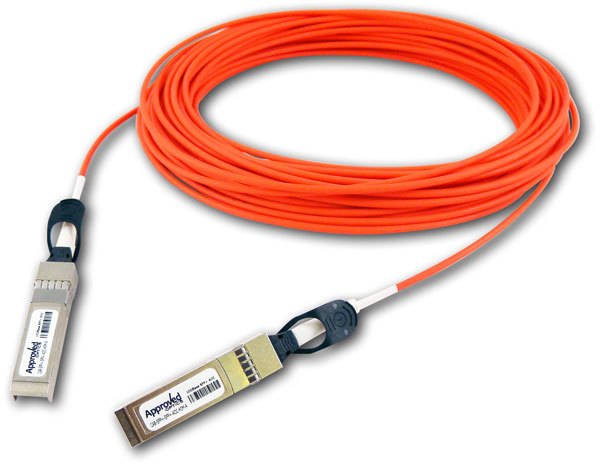
SFP+ to SFP+ AOC is the active optical cable that attaches two SFP+ transceivers to each end. It is used for 10G Ethernet transmission for a much longer distance than direct attach copper cable which can reach up to 100 meters. The material of AOC is made of optic fiber to convey electronics and optics. This makes SFP+ to SFP+ AOC have a higher performance and lower power consumption. Since the SFP+ to SFP+ AOC is always active, it has no other classifications.
SFP+ to SFP+ AOC
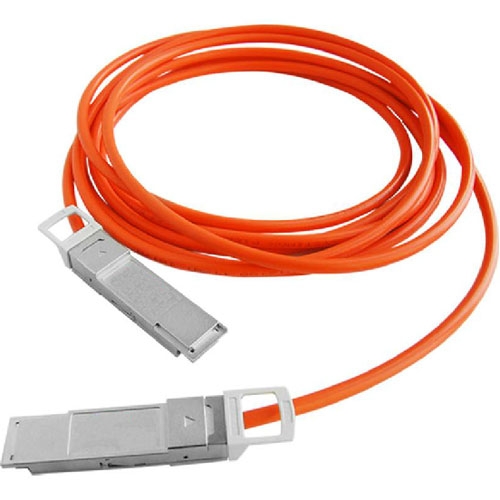
QSFP+ to QSFP+ AOC is the active optical cable which connects an QSFP+ transceiver on one end and a QSFP+ transceiver on the other end. QSFP+ to QSFP+ AOC can reach a wider bandwidth of 40G in Ethernet which enables a faster transmitting speed. The connected distance is limited up to 100m which is longer than DAC products. QSFP+ to QSFP+ AOC transmits electronic and optical data via optic fiber which provides a better functionality, and it is keeping to be active all the time.
QSFP+ to QSFP+ AOC
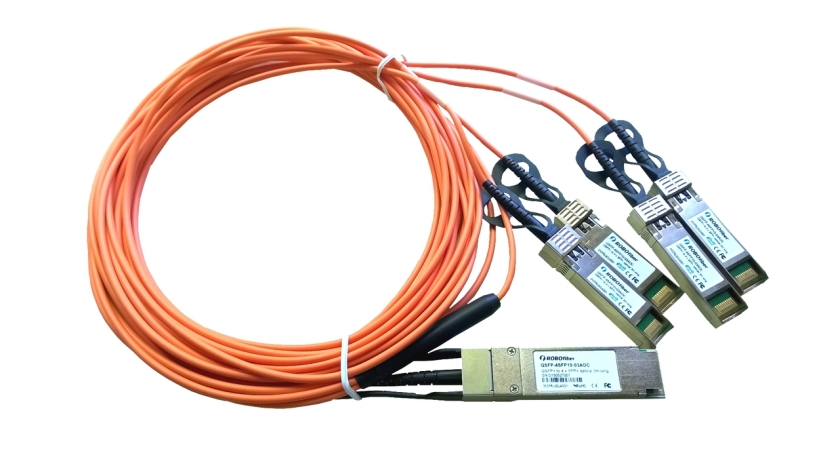
QSFP+ to 4 SFP+ AOC is the active optical cable, one of its terminal end is linked to an QSFP+ module and the other end is linked to four different SFP+ modules. It is applied in the 40G Ethernet with a higher transmission speed than 10G products. The QSFP+ to 4 SFP+ AOC can be connected to more than one device which greatly improved the effectiveness of devices. With the development of AOC, it is now acting as the replacement of DAC for a higer performance with optic fiber.
QSFP+ to 4 SFP+ AOC

2016年4月14日星期四

Direct Attach Cable & Active Optical Cable

Direct Attach Cable (DAC) is the cable that links the integrated duplex data transceivers for bi-directional communication, and the modules and cable can not be separated. It is designed for 10 Gigabit Ethernet, and is only available for 10G port. DAC can be classified into passive and active ones. The passive DAC only provides direct connection between cable ends, transmission through copper wire, while the active DAC can provide electronics and optics within connectors, transmission through fiber. Therefore, DAC is can be either passive or active but Active Optical Cable (AOC) which belongs to the category of active DAC is active all the time. 

Active Optical Cable (AOC) is a kind of cable linked to transceiver modules without connectors. The connection can not be separated, if the transceiver or cable needs to be changed, they should be removed together. It is an active DAC to provide electronics and optics within connectors, transmission through fiber. AOC has the advantage of a wider bandwidth which can reach up to 40Gbps with QSFP+, a lighter weight compared with direct attach copper cable and the electromagnetic (EMI) immunity. But the shortage of AOP is the expensive price in light of its cost.